Teaching
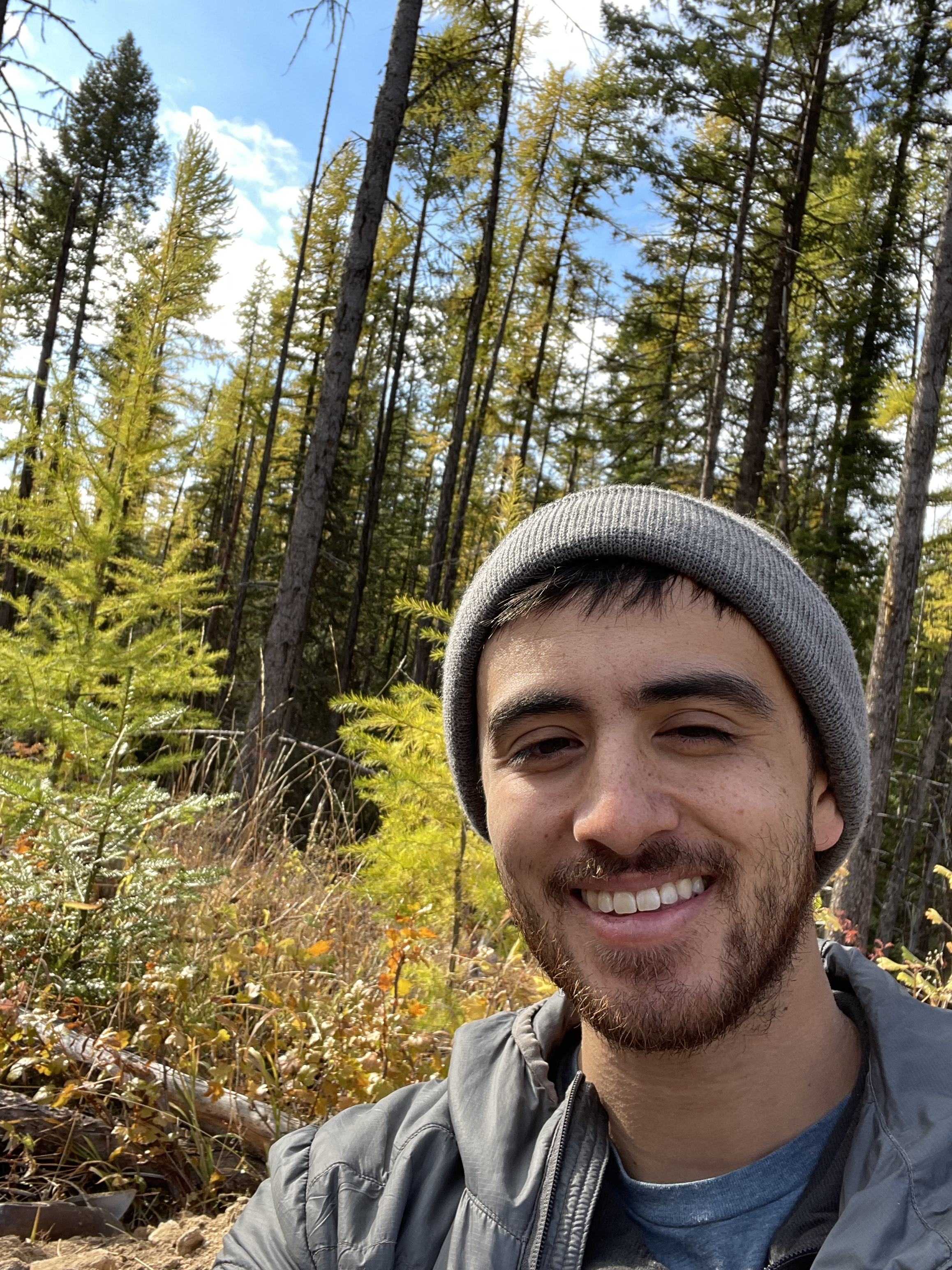
Teaching is a profoundly fulfilling and rewarding experience. As an educator with teaching experience over three courses and across two institutions, I continue to grow and improve undergraduate learning in the environmental sciences. My teaching goals are to: 1) inspire students to engage with course material as critical thinkers; 2) have students develop rigorous and applied scientific questions through inquiry; and 3) familiarize students with new tools and reproducible data analytical skills. I am eager to support students in achieving these goals with a learning environment that recognizes that every student brings their own unique journey to my classroom.
Lidar Remote Sensing - ESRM 433 Spring 2023
Course Objectives:
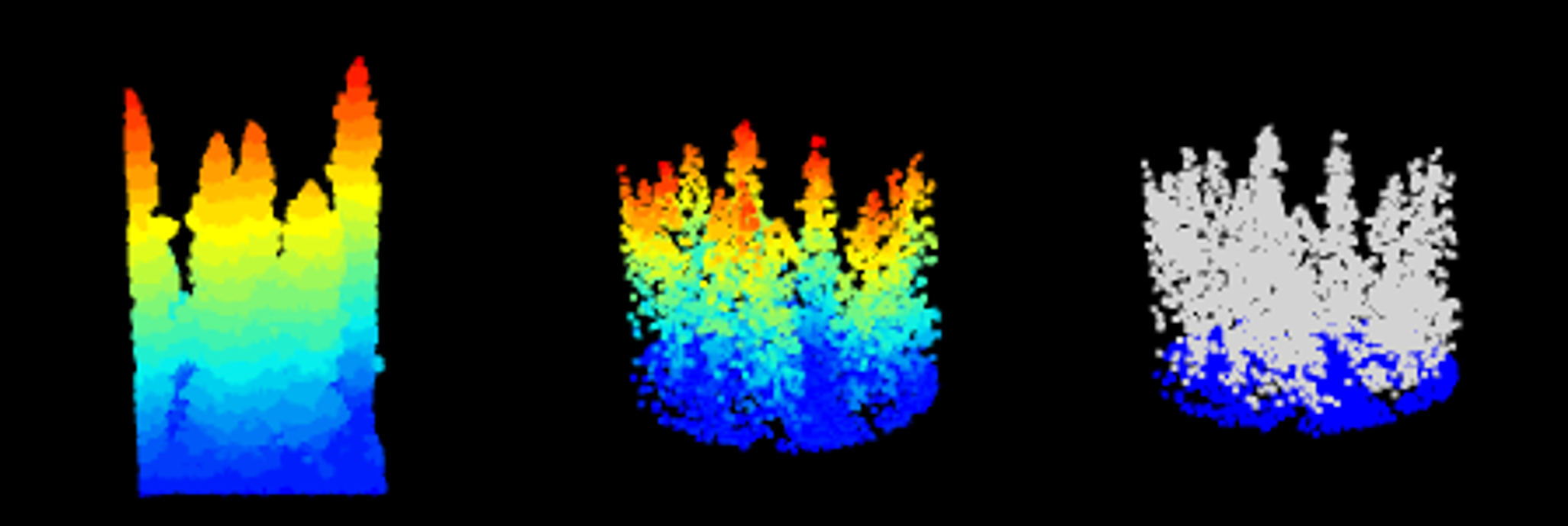
This course equipped students with the knowledge and skills to interpret and manipulate 3D point cloud data from remote sensing sources. They explored state-of-the-art processing techniques and gained practical experience in various LiDAR applications. By the course’s conclusion, students were well-prepared to evaluate available LiDAR data sources and design simple projects related to environmental applications.
I demonstrated how to access and download freely available data from sources such as the Washington Department of Natural Resources and OpenTopography. Students learned to process data in analysis-ready formats such as de-compressing LiDAR point clouds and subsetting them to a study area. To facilitate teaching R code, I leveraged R Markdown and Quarto to create interactive lab modules where students could visualize syntax and see outputs in the same document, including interactive 2D and 3D visualizations. The integrated visualization and syntax gave foundational skills to students as the course progressed, enabling me to introduce more advanced analyses such as using a Random Forest model for wetland classification with LiDAR derivatives, tree segmentation algorithms for stem counts, and extracting LiDAR-derived canopy metrics with georeferenced forest plot allometry data to calculate biomass. The course was designed to adapt with changing open-source tools and could be actively and collaboratively updated on GitHub.
A sample lab is below:
Sustaining Pacific Northwest Ecosystems - ESRM 201 Autumn 2022
Course Objectives
This course provided an introduction to the principles of ecology, focusing on the ecosystems of the Pacific Northwest. It aimed to establish a solid foundation in ecological principles for future upper-division SEFS courses. Throughout the course, students practiced observation and description skills, learned to interpret scientific literature, and collaborated on group projects to improve communication skills.
I primarily taught the introduction to soils module focusing on soil formation and ecosystem services. I introduced undergraduate students to Pacific Northwest ecosystems through extended field visits to the Snoqualmie River floodplain, Union Bay wetlands, and salmon stream restoration sites in Seattle. I used student journaling with inquiry-based teaching approaches to engage students more deeply with their observations, allowing me to solidify lessons in the classroom with examples of scientific research conducted around Washington and the Pacific Northwest.

Introductory Biology - University of New Hampshire
At the University of New Hampshire, I taught four semesters of introductory biology designing curriculum around intertidal and forest ecology. I inspired students to address ecological questions by bringing students outside to connect with their environment and engage with research in the UNH community. Each semester, we guided students through field experiences and inquiry-based learning to design research questions that could be measured in the field on two organized field trips, one to a forest and another to an intertidal zone. We also trained students on field and laboratory measurement tools so they could collect and record their own data. I often taught students how to delineate forestry plots, count trees, and measure tree height and diameter in the forest next to the university. Getting outside motivated students to take on course research projects that captured ecological phenomena such as biodiversity along intertidal gradients, how height vs. diameter varied among tree species, and how invasive green crab presence correlated with intertidal biodiversity.
Mentorship
I have mentored seven students throughout my career conducting field data collection, laboratory analysis, and quantitative modeling for research. At Cornell, I mentored a student in an NSF Research Experience for Undergraduates investigating nitrogen cycling and N2O gas fluxes under different forest types at Hubbard Brook Experimental Forest. I also mentored three undergraduate students from courses I taught at UW, in addition to four others, through creating undergraduate research assistant opportunities. I am proud to acknowledge that two of my former mentees are actively pursuing M.S. degrees at UW, and others have become wetland scientists, field crew leaders, or are applying to doctoral programs.